




nothing like water
OUR IMPACT
Accès à l'eau et équilibre hydrique
L'accès à l'eau potable est un atout essentiel pour la santé humaine et le bien-être, mais même aujourd'hui, malheureusement, de nombreuses communautés dans le monde ne peuvent pas compter sur des sources d'eau potable.
Pour cette raison, en 2023, nous avons lancé une action sur l'équilibre hydrique en collaboration avec l'ONG The Sumba Foundation. D'une part, nous équilibrons la consommation d'eau liée à la production de nos vêtements et des matériaux nécessaires à leur fabrication ; d'autre part, nous contribuons concrètement à l'approvisionnement en eau potable de nombreux villages de l'île de Sumba, en Indonésie.

The Sumba Foundation
La fourniture d'un accès à l'eau potable est de loin le programme le plus important et le plus solide entrepris par la Sumba Foundation. Notre projet avec la Foundation représente une étape importante pour aider les populations de Sumba à sortir de la pauvreté et à améliorer leurs conditions sanitaires.
Grâce à la construction de pompes à eau et de puits, nous sommes en mesure de fournir un accès à l'eau à de nombreuses familles, évitant ainsi aux femmes et aux enfants de devoir parcourir des dizaines de kilomètres chaque jour pour atteindre la source la plus proche.
Grâce à cette collaboration, nous voulons contribuer à créer des économies durables afin d'améliorer les conditions de vie des communautés de Sumba, tout en respectant leurs traditions culturelles.
The Sumba Foundation
PANTAI RUA SCHOOL
At Pantai Rua School, the project began with access to water and sanitation before expanding to the school facilities as a whole. The work serves a community of 207 people.
Two handwashing stations and 9 toilet facilities were installed, alongside a series of repairs to the school building. The work included repairing the roof and wall plaster and replacing damaged doors, helping restore spaces used every day by students and staff.
LOLU WATU
From the spring to the distribution points, the Lolu Watu project has created an extensive system serving 248 people across 41 households.
The work begins with the protection of a spring and includes 5 distribution tanks, 14 public taps, a submersible pump system and 4,000 metres of piping. The network was designed to bring water closer to the places where everyday community life takes place.
The project also reached a local school, where 5 toilet facilities were installed, extending the work to water access and sanitation within the school environment.
RUBHA WELL
The Rubha Well project is still underway, but the first phase of work is already focusing on one of the key elements of the local water system: the spring.
The project includes protecting the spring and building a new storage tank, which will become part of the network supplying water to the community. Further information will be added once the work has been completed.
PADEDI WATU
In Padedi Watu, the project reached 136 people across 22 households, focusing on the local water access system.
Two hand pumps were installed and connected to 1,750 metres of piping. The new infrastructure was designed to make water easier to reach and bring access points closer to the people who rely on them every day.
WE LI
A new water collection and distribution system now serves 128 people across 27 households in We Li.
The project included the installation of 1 main tank, 2 storage tanks and 4 taps, creating a network of infrastructure for the community and improving everyday access to water.
WEI KAPILIT
In Wei Kapilit, a new distribution network has expanded access to water for 242 people across 36 households, bringing the system closer to the community’s everyday needs.
The network includes 3 distribution tanks and 12 public taps connected by 1,350 metres of piping. The project also reached a local kindergarten, where a new sanitation facility was built, extending the work to spaces used by the youngest members of the community.
PALAMOKO
In Palamoko, access to clean water has become a reality for 967 people. Over the course of just 7 months, a fully functioning water supply system was completed, transforming everyday life across 7 villages and 3 schools by providing a reliable source of running water where none had existed before.
The project involved the construction of 1 well, 2 main reservoirs, 7 water tanks, and 15 communal water stations, connected through 6,000 meters of piping. To power the system, an electricity house and power poles were built on-site, enabling the consistent operation of pumps and water distribution across the area.
Today, students at the local kindergarten, primary, and junior high schools benefit from access to running water—an essential step toward better hygiene and sanitation. Local maintenance teams have been trained to manage and sustain the system, ensuring long-term access for the entire community.
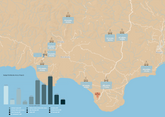
PALAMOKO
In Palamoko, access to clean water has become a reality for 967 people. Over the course of just 7 months, a fully functioning water supply system was completed, transforming everyday life across 7 villages and 3 schools by providing a reliable source of running water where none had existed before.
The project involved the construction of 1 well, 2 main reservoirs, 7 water tanks, and 15 communal water stations, connected through 6,000 meters of piping. To power the system, an electricity house and power poles were built on-site, enabling the consistent operation of pumps and water distribution across the area.
Today, students at the local kindergarten, primary, and junior high schools benefit from access to running water—an essential step toward better hygiene and sanitation. Local maintenance teams have been trained to manage and sustain the system, ensuring long-term access for the entire community.
WELAGAYA (WELIBO)
Completed in September 2024, the Clean Water Program in Welagaya has successfully provided safe, reliable water access to 432 residents in Tanakaka Village, including students and teachers from Primary and Middle Schools.
As part of the project, three school toilet facilities and two handwashing stations—one per school—were installed, significantly improving hygiene conditions and supporting a healthier learning environment for both students and staff.
The new infrastructure includes 1 well, 3 water tanks, and 4 communal water stations, all connected through a pipeline running from Welagaya Spring to the schools and the surrounding village. Despite heavy rainfall and initial concerns from some community members, the system was completed on schedule and is now fully operational.
WE MORO (WELIBO)
Between July and November 2024, the We Moro Water Project delivered clean water access to 475 residents across multiple villages in Desa Welibo, including students and school staff.
The project involved the construction of 1 well, 5 water tanks, and 14 water stations, supported by a 5,750-meter piping network. Despite delays caused by seasonal drought and traditional local ceremonies, the full infrastructure was completed as planned.
A key improvement was the adjustment of the flow system to ensure a steady and reliable water supply, even during dry periods. Local maintenance teams were also trained to manage and sustain the system independently.

{"type":"root","children":[{"type":"paragraph","children":[{"type":"text","value":"Weluri Kalla Project:","bold":true},{"type":"text","value":" Initialement abandonné en 2013, le projet Weluri Kalla a été relancé grâce à notre soutien et au récent raccordement au réseau électrique local. Ce développement a permis la reprise de la construction de pompes pour fournir en eau potable les villages historiques en montagne.\nAu total, 3.500 mètres de canalisations ont été installés, reliés à quatre citernes existantes de 2.300 litres chacune et à un réservoir de 2.000 litres. Ce réseau alimente maintenant 1.037 personnes dans 148 foyers, incluant une école primaire et une école maternelle, réparties dans 11 villages. Dans une deuxième phase, une citerne supplémentaire de 2.300 litres et une autre de 3.200 litres ont été ajoutés pour élargir l'accès à l'eau potable."}]}]}
Malisu Village Project: ce projet est axé sur la construction d’une pompe électrique et d’un puits à la source d’eau existante près du village de Malisu. Grâce à notre soutien, des améliorations significatives ont été apportées, notamment l’installation de deux réservoirs en fibre de 2.300 litres et de quatre robinets, ce qui a permis à 216 personnes réparties dans 28 foyers d’avoir accès à de l’eau propre. Ce projet a notamment transformé la vie des femmes et des enfants de la communauté, qui devaient auparavant effectuer de longues marches pour recueillir un simple seau d’eau.
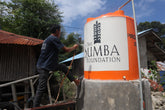
Pahola Water Project: nos contributions ont permis l’installation de trois réservoirs en fibre, d’une capacité de 5.300 litres chacun, et de sept robinets d’eau. Ce projet d’approvisionnement en eau soutient désormais un village de 396 personnes et une école primaire de 194 élèves. En fournissant un accès essentiel à l’eau potable, nous faisons une considérable différence dans la vie et la santé de la communauté et de ses jeunes membres.
Waimadaka Water Project: notre projet a franchi une étape importante en fournissant un approvisionnement en eau fiable à 627 personnes. Parmi elles, 156 élèves de l’école primaire, 161 élèves du collège et 310 habitants des villages environnants. Pour faciliter l’accès de la communauté, nous avons installé deux pompes manuelles au puits et une pompe supplémentaire à un puits voisin.

Hobawawi Water Project: Ce projet, achevé début novembre 2023, a profité à 603 personnes. Avec notre aide, les lignes électriques ont été modernisées et deux stations d'eau construites, facilitant l'accès aux ressources vitales pour les communautés.
Watukarere Water Project: Finalisé en septembre 2023, ce projet a vu la construction de deux citernes de 5.300 litres chacune, une de 2.300 litres et sept stations d'eau. Grâce à ces installations, 310 personnes jouissent désormais de l'accès à l'eau potable.
Praimodu Water Project: Achevé fin novembre 2023, ce projet a permis la construction de deux citernes de 2.300 litres chacune et quatre stations d'eau, offrant à 107 habitants de trois villages un accès à l'eau potable.
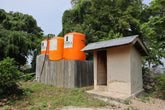
Pakat Water Project: Également finalisé fin novembre 2023, ce projet a inclus l'installation de trois citernes (une de 5.300 litres et deux de 2.300 litres), un générateur, un réservoir et quatre stations d'eau. Ils assurent l'approvisionnement en eau potable de 151 personnes dans deux villages, marquant un pas significatif vers l'accès universel à l'eau potable dans la région.
*Mis à jour le 25/03/2024